
Water Chemistry: Seiryu & Limestone KH Creep Guide for Aquarium Keepers
Quantify calcium carbonate dissolution from Seiryu, Ryuoh, and limestone hardscape under CO2 injection vs. low-tech tanks, and manage KH/GH creep without stressing softwater flora or fauna.
Updated 2026-11-22 · 1700 words
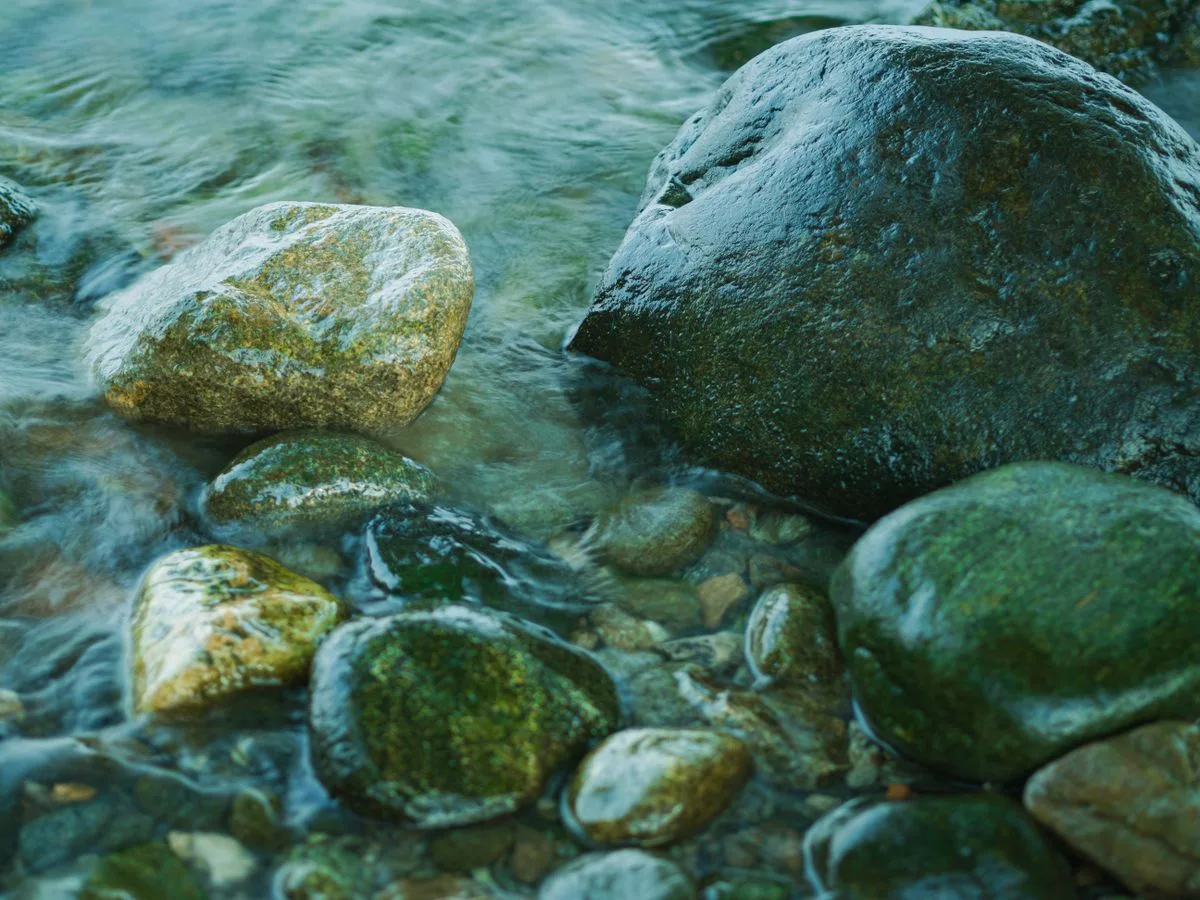
Seiryu stone (and its close cousin Ryuoh stone) is the defining rock of modern Iwagumi and mountain-style aquascaping—and the single most common reason softwater aquascapes drift out of parameter control. Visually, Seiryu is a dark grey metamorphic limestone veined with white crystalline calcite (CaCO3). Chemically, it is a slow-release carbonate bomb. Every day it sits in slightly acidic or CO2-injected water, calcium carbonate dissolves into the water column, steadily ratcheting up carbonate hardness (KH), general hardness (GH), pH, and total dissolved solids (TDS).
1. The Geochemistry of Seiryu Stone Dissolution
Pure calcium carbonate is sparingly soluble in neutral, CO2-free water. However, the moment dissolved carbon dioxide (CO2) or organic acids from aquasoil enter the picture, carbonic acid (H2CO3) attacks exposed calcite veins according to the classic karst dissolution reaction:
CaCO3(s) + CO2(aq) + H2O(l) <=> Ca2+(aq) + 2 HCO3-(aq)
Notice the stoichiometry: every 1 mole of CaCO3 that dissolves releases 1 mole of calcium ions (raising GH) and 2 equivalents of bicarbonate ions (raising KH) in an exact 1:1 dGH-to-dKH ratio (roughly 17.85 ppm CaCO3 equivalents per degree). Because CO2 injection lowers pH into the 6.2–6.6 range while supplying abundant dissolved CO2, pressurized CO2 systems dissolve Seiryu stone 4 to 8 times faster than un-injected low-tech tanks at pH 7.4.
| Hardscape & Tank Regime | Typical Weekly KH Creep | Typical Weekly GH Creep | pH & TDS Impact | Aquasoil Exhaustion Timeline |
|---|---|---|---|---|
| Heavy Seiryu (1 kg/10 L) + 30 ppm CO2 + Aquasoil | +1.5 to +3.5 dKH / week | +1.5 to +3.5 dGH / week | TDS +40–80 ppm/wk; pH creeps +0.3–0.6 | Soil buffering depleted in 3–5 months |
| Moderate Seiryu (1 kg/20 L) + 30 ppm CO2 | +0.8 to +1.5 dKH / week | +0.8 to +1.5 dGH / week | TDS +20–40 ppm/wk | Soil buffering depleted in 6–10 months |
| Seiryu in Low-Tech Tank (no CO2, pH 7.4) | +0.2 to +0.5 dKH / week | +0.2 to +0.5 dGH / week | Gradual pH rise toward 7.8–8.0 | Minimal soil impact if no aquasoil |
| Inert Basalt / Lava / Ohko (Dragon) Stone | 0.0 dKH / week | 0.0 dGH / week | Zero mineral drift | Full 18–24 month soil lifespan |
2. Why KH Creep Kills Active Aquasoil and Breaks Your Drop Checker
Active aquasoils (baked volcanic andosol granules) are engineered to pull carbonate ions out of the water via cation exchange, locking pH near 6.0–6.5 and KH near 0–1 dKH. When you pair 25 kg of Seiryu stone with active aquasoil and pressurized CO2, you create an antagonistic chemical tug-of-war: CO2 dissolves the rock, the rock injects Ca2+ and HCO3-, and the aquasoil burns through its finite hydrogen-ion exchange sites neutralizing that bicarbonate. Within 12 to 20 weeks, the soil's buffering capacity collapses, granules begin muddying, and water parameters swing wildly between water changes.
Equally deceptive is what KH creep does to your CO2 drop checker. A drop checker filled with 4 dKH reference solution measures CO2 partial pressure accurately—it does not get fooled by tank KH. However, if you estimate CO2 from a tank pH/KH chart instead of a drop checker, rising KH makes you think CO2 is low or high unpredictably. Worse, when KH climbs from 1 dKH to 6 dKH between water changes, you must inject the same 30 ppm CO2 at a higher pH (6.8 instead of 6.1), while during a 50% water change with soft RO water, KH suddenly halves from 6 to 3 dKH—causing a sharp osmotic and pH jolt for Caridina shrimp and sensitive tetras.
3. Testing Rock Reactivity Before Building Your Hardscape
Not all "Seiryu" sold in stores has identical calcite density; dark blue-black basaltic variants with sparse white veins leach far less than pale, chalky-veined batches. Before gluing a single stone into your layout:
- The Hydrochloric / Muriatic Acid Fizz Test (Outdoor Only): Place 2–3 drops of 10% muriatic acid (or a pool pH-down solution) on an inconspicuous corner of the dry rock. Vigorous white foaming confirms high surface CaCO3. Rinse thoroughly afterward. (Note: household 5% vinegar is often too weak to bubble reliably on dense metamorphic limestone unless warmed or left on powdered scratchings).
- The 7-Day Bucket Soak Test: Submerge a 1–2 kg sample stone in 10 L (2.6 US gal) of RO or distilled water. Measure TDS, KH, and GH on Day 0 and Day 7. A jump of > 20 ppm TDS or > 1.0 dKH in neutral RO water signals an aggressive leacher that will require strict water-change discipline under CO2.
4. US, UK, and EU Worked Hardscape Management Scenarios
US Worked Example: 45 US Gallon Iwagumi with 65 lb of Seiryu Stone in Seattle
A 45 US gallon (170 L) rimless aquascape in Seattle uses soft municipal tap water (2 dGH, 1.5 dKH, pH 7.1, TDS 45 ppm) and 65 lb (29.5 kg) of heavily veined Seiryu stone over active aquasoil with 30 ppm CO2 injection.
- Observed Drift: Seven days after a 50% water change, tank parameters read 5.5 dGH, 5.0 dKH, and TDS 165 ppm—a weekly creep of +3.5 dKH/+3.5 dGH.
- Stabilization Protocol: Rather than fighting the rock with acid (which dissolves more rock and spikes GH faster), the keeper switches from 50% weekly tap changes to 60% twice-weekly water changes using Seattle tap water (1.5 dKH) during the first 8 weeks, capping maximum weekly KH swing to +1.8 dKH. Magnesium sulfate (MgSO4·7H2O) is dosed at 2.5 g per water change to maintain a healthy 4:1 Ca:Mg ratio since Seiryu leaches almost pure calcium without magnesium.
UK Worked Example: 90 Liter Nano Scape with Caridina Shrimp in Leeds
A 90 L (19.8 UK gal) planted nano tank in Yorkshire houses 30 Crystal Red Shrimp (Caridina cantonensis) and 12 kg of Ryuoh stone, using remineralized RO water (target: 5 dGH, 0–1 dKH, TDS 130 ppm). After 3 weeks, shrimp begin failing molts and TDS reaches 245 ppm.
- Diagnosis: Ryuoh stone pushed KH to 3.5 dKH and GH to 8.5 dGH, exhausting the aquasoil cap and creating fatal osmotic swings at each water change.
- Corrective Action: For true softwater Caridina breeding, heavy limestone is fundamentally incompatible. The keeper slowly acclimates TDS down by 15 ppm per day via 15% RO changes, then swaps the Ryuoh rocks for inert black Manten-substitute basalt/lava rock so KH stays locked at 0.5 dKH.
EU Worked Example: 300 Liter Nature Aquarium in Vienna (Hard Tap + Seiryu)
Vienna tap water arrives naturally hard at 10 dGH and 8 dKH. A 300 L (79 US gal) aquascaper wants a dramatic Seiryu mountain ridge without pushing tank KH to 14 dKH and choking stem plants with carbonate crust.
- RO Blending Strategy: The keeper blends 75% RO water with 25% Vienna tap water for water changes, yielding an influent baseline of 2.5 dGH and 2.0 dKH.
- Clear-Coat Sealing (Selective): Before scaping, the keeper brushes two thin coats of aquarium-safe matte clear two-part epoxy resin onto the buried bases and non-visible backs of the Seiryu boulders (leaving weathered faces natural), cutting reactive surface area by 55%.
- Result: Weekly creep settles at just +0.8 dKH (ending the week at 2.8 dKH), keeping Rotala, Eriocaulon, and Amano shrimp thriving with 50% weekly blended water changes.
5. Why You Should Never Add "pH Down" Acids to Counter Seiryu Creep
Dosing phosphoric acid, sulfuric acid, or commercial "pH Down" liquids to neutralize Seiryu-induced KH backfires catastrophically. The acid reacts immediately with dissolved bicarbonate to release CO2 gas and temporarily lower pH—which accelerates calcium carbonate dissolution from the stone's surface even faster, driving GH and TDS skyward while leaving phosphate or sulfate residues that fuel algae blooms. The only clean ways to control limestone creep are larger/more frequent low-KH water changes, partial stone sealing, or swapping to inert rock.
6. Seiryu & Limestone Management Checklist
- Pre-Screen Every Batch: Run a 7-day RO bucket soak or discreet acid spot-test before committing 20+ kg of stone to a tank.
- Protect Aquasoil Longevity: If keeping > 1 kg of Seiryu per 10 L under CO2, budget for 50–70% weekly RO or soft-tap water changes.
- Balance Calcium With Magnesium: Because limestone leaches Ca2+ without Mg2+, test Ca:Mg ratio or supplement small amounts of Epsom salt (MgSO4) if new plant leaves curl or pale.
- Monitor TDS Weekly: A simple handheld TDS meter tracks cumulative mineral creep in 5 seconds; trigger a water change whenever TDS rises > 30–40 ppm above your freshly mixed baseline.
- Match Livestock to Reality: Pair heavy Seiryu scapes with hardwater-tolerant flora and fauna (Neocaridina, Rasboras, Amano shrimp, Rainbowfish) rather than delicate softwater Caridina or wild blackwater tetras.
7. Distinguishing Calcium Carbonate Creep From Evaporation & Fertilizer Drift
Not every rise in TDS or hardness in a Seiryu-scaped tank comes from the rocks. Before blaming your hardscape, isolate three distinct sources of ionic drift so you apply the right fix:
- Evaporative Concentration: Open-top rimless tanks lose 5–12% of water volume per week to evaporation. Pure H2O leaves the tank while Ca2+, Mg2+, and HCO3- stay behind, raising GH, KH, and TDS proportionally without changing the Ca:Mg ratio. Always top off evaporation exclusively with 0-TDS RO or distilled water—never tap water—before testing KH creep.
- Macro-Fertilizer Salt Accumulation: High-tech Estimative Index (EI) dosing adds potassium nitrate (KNO3), monopotassium phosphate (KH2PO4), and potassium sulfate (K2SO4) three times weekly. These salts raise TDS by 15–35 ppm per week, yet they add zero GH and zero KH. Comparing TDS rise against KH/GH rise immediately tells you whether drift is fertilizer-driven or limestone-driven.
- Seiryu / Calcite Dissolution: If KH and GH rise in lockstep (for example, +2 dKH and +2 dGH over 7 days after topping off evaporation with RO water), limestone dissolution is the unambiguous cause.
Alternative Hardscape Stones With Similar Aesthetics and Zero KH Creep
If you love the jagged, striated silhouette of Seiryu stone but want zero carbonate drift for a softwater biotope or Caridina scape, consider these inert geological alternatives:
| Stone Type | Mineral Composition | Visual Character | KH / GH Impact | Best Application |
|---|---|---|---|---|
| Manten Stone (Authentic) | Silicate / Iron-rich shale | Warm grey-brown crevices, sharp ridges | Near-zero (trace only) | Iwagumi & softwater Nature Aquariums |
| Black Basalt / Frodo-Style Granite | Igneous silicate / feldspar | Dark charcoal, angular fractures | 0.0 dKH / 0.0 dGH | Caridina shrimp & high-CO2 scapes |
| Ohko (Dragon) Stone | Hardened clay / silicate | Honeycomb erosion holes, warm ochre | 0.0 dKH / 0.0 dGH | Aquasoil scapes (rinse clay dust well) |
| Black Lava Rock (Scoria) | Porous volcanic basalt | Textured, lightweight, easy to glue | 0.0 dKH / 0.0 dGH | Epiphyte attachment & bio-active bases |
Ultimately, Seiryu stone is completely manageable once you respect its chemistry: treat it as a dynamic mineral input rather than inert decor, pair it with disciplined weekly water changes using soft or RO-blended water, and reserve true zero-KH setups for silicate-based rock.
How Water Flow and CO2 Diffuser Placement Affect Dissolution Speed
Placing a high-output ceramic CO2 diffuser directly beneath a jagged Seiryu stone cluster accelerates local carbonate erosion because micro-bubbles of pure CO2 create an acidic boundary layer (pH 4.5–5.2) right against the calcite veins. Route your CO2 mist across open plant beds and away from direct impingement on limestone faces. Equally, keep surface agitation gentle enough to retain dissolved CO2 without forcing you to crank bubble rates above 3–4 bubbles per second just to hold a lime-green drop checker.
Reference Sources
- Calcium Carbonate Dissolution Kinetics in CO2-Injected Freshwater Aquariums
- Carbonate Equilibrium, Alkalinity Buffering, and Mineral Hardscape Interactions
- Softwater Aquascaping Soil Exhaustion and Ionic Drift